
The Antibody Society

the official website of the antibody society

An international non-profit supporting antibody-related research and development.

  • LOG IN
  • BECOME A MEMBER
  • About Us
    • Our Team
      • Directors and Officers
      • Our Staff
      • Our Committees
    • Sponsors & Partners
  • Events Calendar
    • Current Events
  • AIRR Community
    • AIRR Community News
    • AIRR Community Newsletter
    • AIRR Community Seminar Series
    • AIRR Community Meetings
      • AIRR Community Meeting VIII – Decoding and Recoding Immunity
      • Zooming into the Community III
      • AIRR Community Meeting VII – Learnings and Perspectives
      • AIRR Community Special Event 2023  – Zooming in to the Community II
      • AIRR Community Meeting VI: “Exploring New Frontiers”
      • AIRR Community Meeting V: “Zooming in to the AIRR Community”
      • AIRR Community Meeting V Pre-Meetings
        • AIRR-seq in the Pandemic
        • AIRR-seq Biological Standards and Workflows
      • AIRR Community Special Event: “Response to COVID-19”
      • AIRR Community Meeting IV: “Bridging the Gaps”
      • AIRR Community Meeting III
        • Day 1
        • Day 2
        • Day 3
        • Day 4
      • AIRR Community Meeting II
      • AIRR Community Meeting I
    • On AIRR – An AIRR Community Podcast
    • AIRR Data Commons
    • AIRR-C Germline Database Resources
    • AIRR Community Publications
    • AIRR Community Working Groups
      • Biological Resources Working Group
      • Common Repository Working Group
      • Diagnostics Working Group
      • Germline Database Working Group
      • Legal and Ethics Working Group
      • Software Working Group
      • Standards Working Group
    • AIRR Community Sub-Committees
      • Communications Sub-Committee
      • Executive Sub-Committee
      • Inferred Allele Review Committee
      • Meetings Sub-Committee
      • Strategic Planning Sub-Committee
    • AIRR Community Webinar Series
    • AIRR Community Calendar
    • AIRR Community Resources
  • Programs
    • Conferences
    • Competitions
      • Huston Award
        • Huston Award submission guidelines
      • Research Competition
      • Science Writing
    • Podcast
    • Webinars
      • Upcoming Webinars in 2026
  • Business Intelligence
    • Antibody Discovery & Development
      • Antibody Validation
      • Commercializing Antibody Therapeutics
      • Adaptive Immune Receptor Repertoires
    • Antibody News
    • Antibody therapeutics approved or in regulatory review in the EU or US
      • Antibody therapeutics product data
    • Antibodies to Watch
      • Antibodies in early-stage studies
    • Presentations
  • Learning and Career Center
    • Research Resources
      • Antibodies in late-stage clinical studies
    • Education Resources
    • Society Publications
    • Career Shorts
  • Members
    • Login
    • Note to members
    • Member discount codes
  • Sponsors & Partners
You are here: Home / Archives for Janice Reichert

Antibodies to Watch in 2021 is now online!

January 19, 2021 by Janice Reichert

Click here to download this newly published mAbs article!
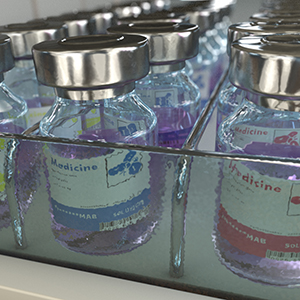
In this 12th annual installment of the Antibodies to Watch article series, we discuss key events in antibody therapeutics development that occurred in 2020 and forecast events that might occur in 2021. The coronavirus disease 2019 (COVID-19) pandemic posed an array of challenges and opportunities to the healthcare system in 2020, and it will continue to do so in 2021. Remarkably, by late November 2020, two anti-SARS-CoV antibody products, bamlanivimab and the casirivimab and imdevimab cocktail, were authorized for emergency use by the US Food and Drug Administration (FDA) and the repurposed antibodies levilimab and itolizumab had been registered for emergency use as treatments for COVID-19 in Russia and India, respectively.

Despite the pandemic, 10 antibody therapeutics had been granted first approval in the US or EU in 2020, as of November, and 2 more (tanezumab and margetuximab) may be granted approvals in December 2020.* In addition, prolgolimab and olokizumab had been granted first approvals in Russia and cetuximab saratolacan sodium was first approved in Japan.

The number of approvals in 2021 may set a record, as marketing applications for 16 investigational antibody therapeutics are already undergoing regulatory review by either the FDA or the European Medicines Agency. Of these 16 mAbs, 11 are possible treatments for non-cancer indications and 5 are potential treatments for cancer.

Based on the information publicly available as of November 2020, 44 antibody therapeutics are in late-stage clinical studies for non-cancer indications, including 6 for COVID-19, and marketing applications for at least 6 (leronlimab, tezepelumab, faricimab, ligelizumab, garetosmab, and fasinumab) are planned in 2021. In addition, 44 antibody therapeutics are in late-stage clinical studies for cancer indications. Of these 44, marketing application submissions for 13 may be submitted by the end of 2021.

*Note added in proof on key events announced during December 1-21, 2020: margetuximab-cmkb and ansuvimab-zykl were approved by FDA on December 16 and 21, 2020, respectively; biologics license applications were submitted for ublituximab and amivantamab.

Keep up to date on US and EU approvals all year by visiting our website!

The Antibody Society maintains a comprehensive table of approved monoclonal antibody therapeutics and those in regulatory review in the EU or US. The table, which is located in the Web Resources section of the Society’s website, can be downloaded in Excel format.
Filed Under: Uncategorized

FDA approves ansuvimab-zykl for Ebola virus infection

December 21, 2020 by Janice Reichert

On December 21, 2020, the US Food and Drug Administration approved Ebanga (ansuvimab-zykl) for the treatment for Zaire ebolavirus (Ebolavirus) infection in adults and children. Ebanga had been granted US Orphan Drug designation and Breakthrough Therapy designations. Ansuvimab is a human IgG1 monoclonal antibody that binds and neutralizes the virus.

The safety and efficacy of Ebanga were evaluated in the multi-center, open-label, randomized controlled PALM trial. In this study, 174 participants (120 adults and 54 pediatric patients) with confirmed Ebolavirus infection received Ebanga intravenously as a single 50 mg/kg infusion and 168 participants (135 adults and 33 pediatric patients) received an investigational control. The primary efficacy endpoint was 28-day mortality. Of the 174 patients who received Ebanga, 35.1% died after 28 days, compared to 49.4% of the 168 patients who received a control.

Ebanga is the 12th antibody therapeutic to be granted a first approval in the US or EU during 2020.

The Antibody Society maintains a comprehensive table of approved monoclonal antibody therapeutics and those in regulatory review in the EU or US. The table, which is located in the Web Resources section of the Society’s website, can be downloaded in Excel format.
Filed Under: Antibody therapeutic, Approvals, Food and Drug Administration Tagged With: ansuvimab, antibody therapeutics, approved antibodies, Food and Drug Administration

FDA approves MARGENZA™

December 19, 2020 by Janice Reichert

On December 16, 2020, the US Food and Drug Administration approved margetuximab-cmkb (MARGENZA), in combination with chemotherapy, for the treatment of adult patients with metastatic HER2-positive breast cancer who have received two or more prior anti-HER2 regimens, at least one of which was for metastatic disease. MARGENZA is a chimeric IgG1 monoclonal antibody that binds to HER2. The antibody’s modified Fc region increases binding to the activating Fc receptor CD16A and decreases binding to the inhibitory Fc receptor CD32B,  which leads to greater in vitro antibody-dependent cell-mediated cytotoxicity and natural killer cell activation.

FDA’s approval was based on safety and efficacy results from the pivotal Phase 3 SOPHIA trial, which showed a statistically significant 24% reduction in the risk of disease progression or death with MARGENZA plus chemotherapy compared with trastuzumab plus chemotherapy (hazard ratio [HR]=0.76; 95% CI, 0.59-0.98; P=0.033; median PFS 5.8 vs 4.9 months). The objective response rate  for MARGENZA plus chemotherapy was 22% vs 16% for trastuzumab plus chemotherapy.

MARGENZA is the 11th antibody therapeutic to be granted a first approval in the US or EU during 2020.

The Antibody Society maintains a comprehensive table of approved monoclonal antibody therapeutics and those in regulatory review in the EU or US. The table, which is located in the Web Resources section of the Society’s website, can be downloaded in Excel format.

Filed Under: Antibody therapeutic, Approvals, Food and Drug Administration Tagged With: antibody therapeutics, approved antibodies, Food and Drug Administration

FDA approves naxitamab-gqgk (DANYELZA®)

November 26, 2020 by Janice Reichert

On November 25, 2020, Y-mAbs announced that the FDA approved naxitamab-gqgk (DANYELZA®) 40mg/10ml in combination with granulocyte-macrophage colony-stimulating factor for the treatment of pediatric patients 1 year of age and older and adult patients with relapsed or refractory high-risk neuroblastoma in the bone or bone marrow who have demonstrated a partial response, minor response, or stable disease to prior therapy. The approval for this indication was granted under FDA’s accelerated approval regulations based on the overall response rate and duration of response.

Naxitamab, a humanized anti-GD2 IgG1k antibody was developed by Memorial Sloan Kettering Cancer Center and licensed to Y-mAbs Therapeutics. FDA granted Breakthrough Therapy and  Rare Pediatric Drug designations to naxitamab for the treatment of patients with neuroblastoma, and naxitamab was granted Orphan Drug designations in the EU and US for this indication.

DANYELZA® is the 10th antibody therapeutic to be granted a first approval in the US or EU in 2020.

The Antibody Society maintains a comprehensive table of approved monoclonal antibody therapeutics and those in regulatory review in the EU or US. The table, which is located in the Web Resources section of the Society’s website, can be downloaded in Excel format.

Filed Under: Antibody therapeutic, Food and Drug Administration Tagged With: antibody therapeutics, approved antibodies, Food and Drug Administration, naxitamab

Anti-SARS-CoV-2 casirivimab and imdevimab (REGN-COV2) authorized in the US for COVID-19

November 22, 2020 by Janice Reichert

On November 20, 2020, the US Food and Drug Administration authorized the emergency use of casirivimab and imdevimab (REGN-COV2), both of which are recombinant human IgG1 monoclonal antibodies that target the receptor binding domain of the spike protein of SARS-CoV-2. This antibody cocktail has been shown to reduce COVID-19-related hospitalization or emergency room visits in patients at high risk for disease progression within 28 days after treatment when compared to placebo.

After reviewing the analysis of Phase 1 and 2 data from the ongoing Phase 1/2/3 NCT04425629 study, the agency concluded that “it is reasonable to believe that casirivimab and imdevimab, administered together, may be effective for the treatment of mild to moderate COVID-19 in adults and pediatric patients (12 years of age and older weighing at least 40 kg) with positive results of direct SARS-CoV-2 viral testing, and who are at high risk for progressing to severe COVID-19 and/or hospitalization, and that, when used under the conditions described in this authorization, the known and potential benefits of casirivimab and imdevimab, administered together, outweigh the known and potential risks of such product.”

The EUA letter further states that distribution of REGN-COV2 will be directed by the U.S. government, and its EUA will be effective until the declaration that circumstances exist justifying the authorization of the emergency use of drugs and biological products during the COVID-19 pandemic is terminated or the EUA is revoked. The authorized dosage is 1,200 mg of casirivimab and 1,200 mg of imdevimab administered together as a single intravenous (IV) infusion over at least 60 minutes via pump or gravity as soon as possible after positive viral test for SARS-CoV-2 and within 10 days of symptom onset.

Regeneron was granted a $450 million contract to manufacture and supply REGN-COV2 by the US government, which has committed to making the doses available to Americans for free. The agreement covers a fixed number of bulk lots, as well as fill/finish and storage activities. Delivery of REGN-COV2 drug product started during the third quarter of 2020, and the company expects to have ~ 80,000 doses available by the end of November, ~200,000 total doses ready by the first week of January 2021, and ~ 300,000 total doses ready by the end of January 2021.

Filed Under: Antibody therapeutic, COVID-19 Tagged With: antibody therapeutics, COVID-19, Food and Drug Administration, SARS-CoV-2

« Previous Page
Next Page »
  • Home
  • Privacy & Terms of Use
  • About
  • Directors and Officers
  • Advisors
  • Sponsors & Partners Old
  • Mission & Activities
  • Join the Society
  • Membership Levels
  • Members
  • Login
  • Antibody therapeutics approved or in regulatory review in the EU or US
  • Meeting reports
  • Presentations
  • Contact

©2015 - scicomvisuals