

The Antibody Society

the official website of the antibody society

An international non-profit supporting antibody-related research and development.

  • LOG IN
  • BECOME A MEMBER
  • About Us
    • Our Team
      • Directors and Officers
      • Our Staff
      • Our Committees
    • Sponsors & Partners
  • Events Calendar
    • Current Events
  • AIRR Community
    • AIRR Community News
    • AIRR Community Newsletter
    • AIRR Community Seminar Series
    • AIRR Community Meetings
      • AIRR Community Meeting VIII – Decoding and Recoding Immunity
      • Zooming into the Community III
      • AIRR Community Meeting VII – Learnings and Perspectives
      • AIRR Community Special Event 2023  – Zooming in to the Community II
      • AIRR Community Meeting VI: “Exploring New Frontiers”
      • AIRR Community Meeting V: “Zooming in to the AIRR Community”
      • AIRR Community Meeting V Pre-Meetings
        • AIRR-seq in the Pandemic
        • AIRR-seq Biological Standards and Workflows
      • AIRR Community Special Event: “Response to COVID-19”
      • AIRR Community Meeting IV: “Bridging the Gaps”
      • AIRR Community Meeting III
        • Day 1
        • Day 2
        • Day 3
        • Day 4
      • AIRR Community Meeting II
      • AIRR Community Meeting I
    • On AIRR – An AIRR Community Podcast
    • AIRR Data Commons
    • AIRR-C Germline Database Resources
    • AIRR Community Publications
    • AIRR Community Working Groups
      • Biological Resources Working Group
      • Common Repository Working Group
      • Diagnostics Working Group
      • Germline Database Working Group
      • Legal and Ethics Working Group
      • Software Working Group
      • Standards Working Group
    • AIRR Community Sub-Committees
      • Communications Sub-Committee
      • Executive Sub-Committee
      • Inferred Allele Review Committee
      • Meetings Sub-Committee
      • Strategic Planning Sub-Committee
    • AIRR Community Webinar Series
    • AIRR Community Calendar
    • AIRR Community Resources
  • Programs
    • Conferences
    • Competitions
      • Huston Award
        • Huston Award submission guidelines
      • Research Competition
      • Science Writing
    • Podcast
    • Webinars
      • Upcoming Webinars in 2026
  • Business Intelligence
    • Antibody Discovery & Development
      • Antibody Validation
      • Commercializing Antibody Therapeutics
      • Adaptive Immune Receptor Repertoires
    • Antibody News
    • Antibody therapeutics approved or in regulatory review in the EU or US
      • Antibody therapeutics product data
    • Antibodies to Watch
      • Antibodies in early-stage studies
    • Presentations
  • Learning and Career Center
    • Research Resources
      • Antibodies in late-stage clinical studies
    • Education Resources
    • Society Publications
    • Career Shorts
  • Members
    • Login
    • Note to members
    • Member discount codes
  • Sponsors & Partners
You are here: Home / Archives for Janice Reichert

Vabysmo™ (faricimab) approved in the European Union for ophthalmic disorders

September 20, 2022 by Janice Reichert

On September 15, 2022, the European Commission approved Vabysmo ™ (faricimab) for the treatment of wet, or neovascular, age-related macular degeneration (AMD) and visual impairment due to diabetic macular edema (DME). Faricimab (RO6867461, RG7716) is an anti-vascular endothelial growth factor-A (VEGF-A) and anti-angiopoietin-2 (Ang-2) bispecific antibody derived from Roche’s CrossMab technology.

The approval in the European Union was based in part on results from four Phase 3 studies in wet AMD and DME. The TENAYA (NCT03823287) and LUCERNE (NCT03823300) studies evaluated the effects of faricimab (6.0 mg administered at fixed intervals of every two, three, or four months) and aflibercept (Eylea®) (2.0 mg administered at fixed two-month intervals) in wet AMD patients. The YOSEMITE (NCT03622580) and RHINE studies (NCT03622593) compared the effects of faricimab (6.0 mg administered at personalized treatment intervals (PTI) of up to four months or 6.0 mg administered at fixed two-month intervals) to those of aflibercept (2.0 mg administered at fixed two-month intervals) in DME patients. Results of the TENAYA and LUCERNE and YOSEMITE and RHINE studies were published in The Lancet.

Interested in more information? Explore our searchable table of antibody therapeutics approved in the EU or US for details.
Filed Under: Antibody therapeutic, European Medicines Agency Tagged With: antibody therapeutics, European Medicines Agency

Spesolimab (SPEVIGO®) approved by FDA

September 2, 2022 by Janice Reichert

Spesolimab (SPEVIGO®), a humanized anti-IL-36 IgG1k antibody developed by Boehringer Ingelheim, was approved by the FDA as a treatment option for generalized pustular psoriasis (GPP) flares in adults, as announced by BI on September 1, 2022. GPP is a rare and potentially life-threatening neutrophilic skin disease characterized by episodes of widespread eruptions of painful, sterile pustules. The FDA had previously granted spesolimab Breakthrough Therapy and Orphan Drug designations for the treatment of GPP, and the BLA for spesolimab received a Priority review. In addition, spesolimab has received Breakthrough Therapy Designation in China and Taiwan, Priority Review in the China, Orphan Drug Designation in Korea, Switzerland and Australia, and Rare Disease designation and fast track in Taiwan for the treatment of GPP flares. An MAA for use of spesolimab as a treatment of flares in GPP is undergoing evaluation by the EMA.

The approval by FDA was based in part on results from the 12-week pivotal Phase 2 Effisayil™ 1 clinical trial (NCT03782792), which evaluated the efficacy, safety, and tolerability of a single 900 mg dose of IV administered spesolimab, with the option of a second dose if symptoms persisted on Day 8, vs placebo in 53 patients experiencing a GPP flare. After one week, 54% of patients treated with SPEVIGO showed no visible pustules compared to 6% of those who received placebo. A 3-arm, 5-year Phase 2 study (NCT03886246) to evaluate spesolimab in GPP patients who took part in previous studies with spesolimab is currently recruiting an estimated 155 participants. Patients will be administered SPEVIGO® at 4-, 6- or 12-week intervals. The primary outcome measure of the study is the occurrence of treatment emergent adverse events (TEAEs) up to week 252 of maintenance treatment; secondary outcome measures relate to the efficacy of the drug.

Curious about other approved antibody therapeutics? Summary data can be found here and more extensive data can be found here.

Filed Under: Antibody therapeutic, Food and Drug Administration Tagged With: approved antibodies, Food and Drug Administration, Spesolimab

August 23, 2022 by Janice Reichert

The University of Houston is now accepting applications for an Assistant or Associate Professor position in Chemical & Biomolecular Engineering.

The William A. Brookshire Department of Chemical & Biomolecular Engineering at the University of Houston (UH) seeks to hire a tenure-track or tenured faculty member at the rank of Assistant or Associate Professor under the Presidential Frontier Faculty Program with research interests in the field of Biomolecular Engineering, with Immunoengineering being the preferred focus area.

The Presidential Frontier Faculty Program is a university-wide integrated interdisciplinary hiring campaign that is overseen by central University leadership and encompasses hiring a large cohort of convergence research faculty to work on health, energy, sustainability, and security. Competitive candidates are expected to have a Ph.D. degree or equivalent when they start their position and show potential for exceptional research and excellence in teaching and service. The successful candidate will be appointed at a rank commensurate with accomplishments and expertise.

More information on the role, responsibilities and requirements can be found here.

A link for uploading application materials will be posted here: http://www.chee.uh.edu/about/open-positions

https://www.antibodysociety.org/jobs/uk-based-senior-molecular-biologist-position-open/

Filed Under: Jobs Tagged With: Jobs

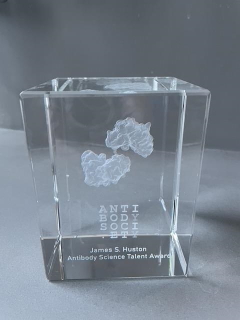
The Huston Antibody Science Talent Award competition is open!

August 17, 2022 by Janice Reichert

The James S. Huston Antibody Science Talent Award is sponsored by The Antibody Society to recognize and encourage upcoming scientists in the field of Antibody Engineering and Therapeutics. Early career research scientists who have received an advanced degree (Ph.D., M.D., or equivalent) within the past ten (10) years are eligible for the Award. The scientist is recognized for making important contributions to the antibody field and/or the dissemination of antibody knowledge. The recipient will be invited to give a lecture on their work, which will be made available on-line on The Antibody Society’s website, and to give a lecture at the Antibody Engineering & Therapeutics conference in December 2022.

The award includes: international recognition of the scientist’s accomplishments, a $1500 USD prize, and travel costs and registration fees to attend the annual Antibody Engineering & Therapeutics conference in San Diego, California.

The nomination process details are here. The deadline for submission is September 15, 2022.

Filed Under: Antibody engineering, Huston Award Tagged With: antibody engineering, competition, Huston Award

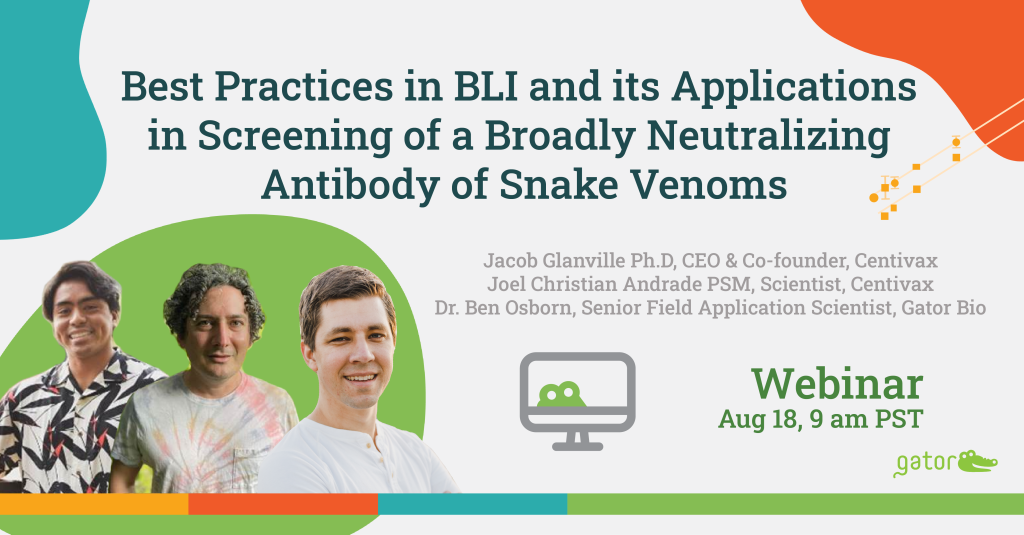
Register for our upcoming webinar on BLI and its use in anti-snake venom antibody discovery

July 19, 2022 by Janice Reichert

Biolayer interferometry (BLI) is gaining popularity for protein and small molecule quantitation and kinetics research. The new advancements in biosensors, ease of use, reproducibility and low cost is driving its adoption. Even though BLI is one of the easiest of the tools, as with many other techniques, getting the best data depends on optimization of some key experimental factors. This webinar will discuss the best practices in BLI and result of such implementation by way of an example of screening of a broadly neutralizing antibody of snake venoms.

Snake envenomation results in over 100,000 deaths and 300,000 permanent disabilities in humans annually. Contemporary antivenoms are produced from the polyclonal serum of venom-immunized livestock and are specific to a single or narrow genetic range of related snakes. Could a broadly neutralizing monoclonal antibody, or a cocktail of a few broad components, provide protection from diverse snake venoms? Centi-3FTX-D09, originating from the B-cell memory of a human subject with an extensive history of diverse snake venom exposure, recognized a conserved neutralizing epitope of 3-finger toxins (3FTXs), a dominant snake neurotoxin. Four crystal structures of Centi-3FTX-D09 in complex with 3FTXs from mamba, taipan, krait, and cobra revealed the mechanism of broad neutralization to be epitope mimicry of the interface between these neurotoxins and their native host target, the nicotinic acetylcholine receptor. Centi-3FTX-D09 provided in-vivo protection against diverse 3FTXs and, in combination with the phospholipase inhibitor varespladib, protection against whole venom challenge for diverse, genetically distinct, elapid species.

About the Speakers

Register here!

Filed Under: Antibody discovery Tagged With: antibody discovery, snake venom

« Previous Page
Next Page »
  • Home
  • Privacy & Terms of Use
  • About
  • Directors and Officers
  • Advisors
  • Sponsors & Partners Old
  • Mission & Activities
  • Join the Society
  • Membership Levels
  • Members
  • Login
  • Antibody therapeutics approved or in regulatory review in the EU or US
  • Meeting reports
  • Presentations
  • Contact

©2015 - scicomvisuals